

November 13, Manama (BNA): In its worldwide report on evaluating the Kingdom of Bahrain’s preparedness for artificial intelligence (AI), the United Nations Educational, Scientific, and Cultural Organization (UNESCO) praised the Kingdom’s encouraging advancements in this field of technology. The report is a component of UNESCO’s efforts to assist member nations in assessing their preparedness to implement AI technology using the Readiness Assessment Methodology (RAM) in accordance with globally accepted standards. The second GCC nation to release a report of this kind is Bahrain.
UNESCO releases global report on Bahrain’s AI readiness
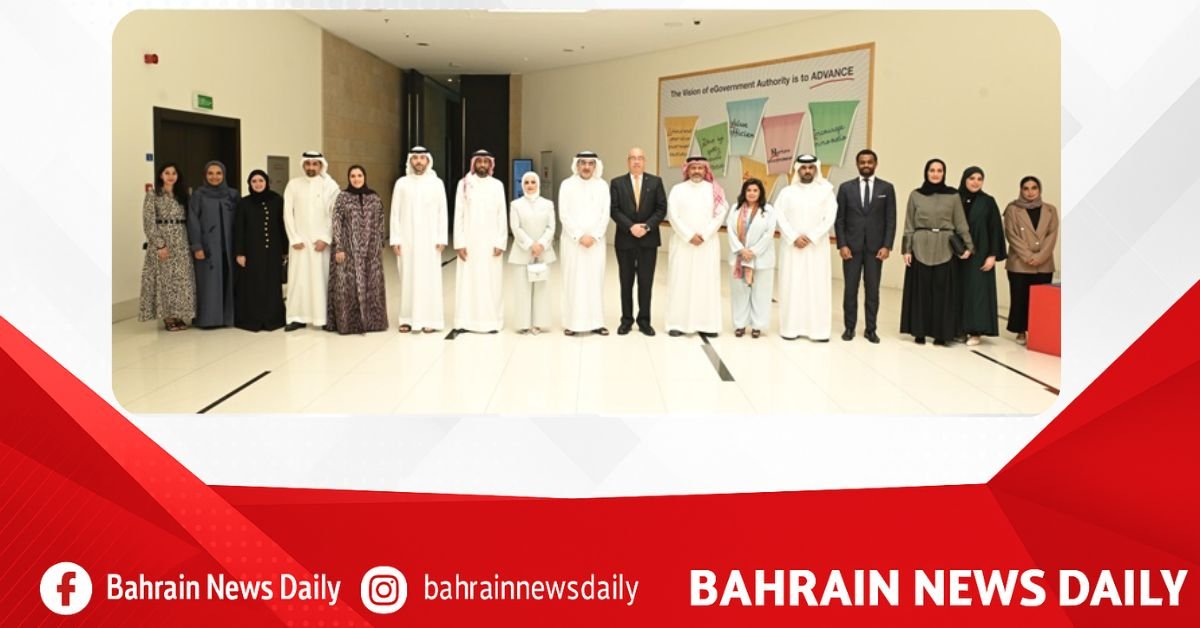
The statement was made during a formal meeting between officials of UNESCO and the Information & eGovernment Authority (iGA) to introduce the AI Readiness Assessment Report on the Kingdom of Bahrain, which will be available on the National Portal (www.bahrain.bh) and iGA’s official website (www.iga.gov.bh). Dr. Mubarak Abdullah Butti, Secretary-General of the Bahrain National Commission for Education, Science, and Culture; Dr. Diana Al Jahromi, Secretary-General of the Higher Education Council; Mohammed Ali Al Qaed, Chief Executive of iGA; Salah Khaled, Director of the UNESCO Doha Office for the Gulf States and Yemen; and representatives from a number of public and private organizations that contributed to the report were all present.
Al Qaed took satisfaction in the report’s release, saying it demonstrates the government’s commitment to bolstering domestic initiatives to improve Bahrain’s digital progress and competitiveness in the regional technology market. He added that it shows the iGA’s dedication to carrying out the directions of the Ministerial Committee for Information & Communication Technology, which is led by Interior Minister General Shaikh Rashid bin Abdullah Al Khalifa. The committee’s strategy focuses on increasing the uptake and application of AI technologies through thoroughly researched plans that outline priorities, obstacles, and workable solutions. This will allow Bahrain to improve national operations, enhance services, and create cutting-edge systems that offer a distinctive experience for people, organizations, and businesses.
He emphasized the significance of this accomplishment as a development that demonstrates Bahrain’s dedication to the ethical and responsible application of AI technologies. He clarified that the six primary pillars of the UNESCO AI Readiness Assessment (RAM)—national governance, law and regulation, society and culture, research and education, economic factors, and technological infrastructure—serve as a crucial international instrument for assessing national preparedness.
According to Al Qaed, the report aids in precisely evaluating the current state of affairs, identifying strengths, weaknesses, and development prospects, and creating future national plans that improve Bahrain’s preparedness to utilize AI technology in a responsible and secure manner. Additionally, it strengthens the Kingdom’s standing as one of the top nations in this area both domestically and globally and supports its aspirations to create a digital economy based on information and innovation.
He expressed gratitude to all governmental and business organizations that collaborated with the iGA to provide the data needed for the study and praised UNESCO’s role in encouraging member nations to use AI and supporting their strategic goals. He praised their collaboration and teamwork in coordinating goals and sharing knowledge, boosting Bahrain’s AI readiness and promoting sustainable growth grounded on international best practices.
Salah Khaled, Director of the UNESCO Doha Office for the Gulf States and Yemen, congratulated the Kingdom of Bahrain on this accomplishment, pointing out that the report’s release reaffirms Bahrain’s dedication to digital transformation and its contribution to the Sustainable Development Goals, particularly those pertaining to equality, innovation, education, and robust institutions. He emphasized Bahrain’s leadership in digital governance, pointing out that the Kingdom’s institutions and public policies are strong in promoting digital services and transformation, as seen by its placing 18th internationally in the 2024 United Nations E-Government Development Index.
He also emphasized Bahrain’s dedication to sustainability and diversity, pointing out that 42% of STEM (science, technology, engineering, and mathematics) students are female and that the Kingdom keeps funding the development of digital skills to guarantee all-encompassing change.
In line with Bahrain Vision 2030, which places people, rights, and values at the center of technological advancement, Khaled continued, the report contains a number of important recommendations that serve as a clear roadmap for Bahrain to strengthen its efforts in developing ethical and inclusive AI. He emphasized the significance of ongoing collaboration in order to facilitate the execution of these suggestions.
The UNESCO report praised Bahrain’s adoption of AI and its ability to lead the region in innovative, ethical, and inclusive AI. The creation of the iGA’s Innovation and Advanced Technology Directorate, the adoption of the GCC AI Ethics Guiding Manual in 2023, the introduction of the National AI Policy in 2025, and a number of auxiliary initiatives like the Innovation Hub and AI Talent Programme were among the major national initiatives in digital transformation and eGovernment that were highlighted.
In order to guarantee sustainable, people-centered innovation, the report also offered a number of suggestions to help Bahrain’s attempts to adopt AI and advance research on the technology’s social, economic, and environmental effects.
The AI Readiness Assessment Methodology (RAM) is recognized as one of the top international frameworks that assist nations in assessing their readiness for the ethical and responsible adoption of AI, identifying obstacles and solutions, and creating strong plans that propel technological and digital advancement.

