

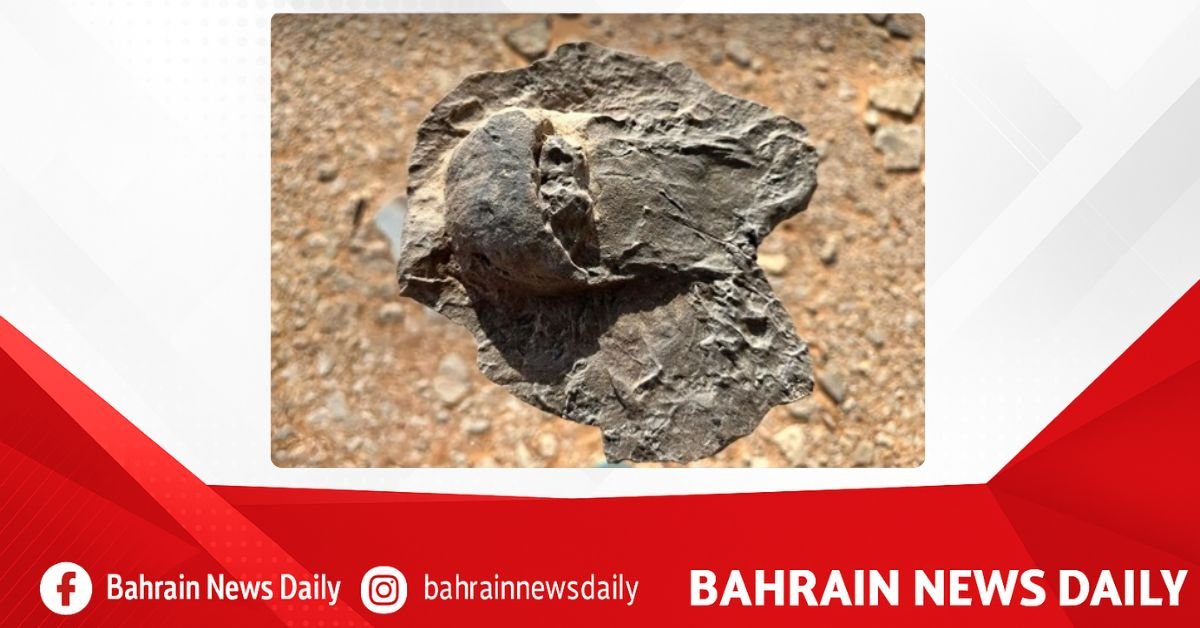
As part of a peer-reviewed study published in Gondwana Research, an international journal specializing in geological sciences, the Royal Commission for AlUla announced the documentation and worldwide publication of a scientific discovery involving rare horseshoe crab fossils dating back roughly 465 million years.
Royal Commission for AlUla announces scientific discovery of rare fossils dating back 465 million years
For the first time, the fossil discovery has been reported globally. The fossils, which were discovered in AlUla’s AlGharameel Nature Reserve, advance scientific knowledge of the natural and geological history of the area.
The fossils are among the earliest horseshoe crab fossils found globally, dating to the Middle Ordovician period, roughly 485–444 million years ago. When compared to other specimens from the same era, researchers observed that they were remarkably huge. Alongside trace fossils that showed the animals’ attempts to revert to their original posture, all of the fossils were discovered preserved upside down, a method of preservation never before documented. These characteristics offer uncommon proof of early behavioral habits.
Strong seasonal storms were common during that time, according to geological stratigraphic study, indicating that the organisms gathered in shallow coastal settings impacted by such events. These circumstances helped preserve them in sedimentary deposits and shed light on the ancient coastal environment of AlUla.
Additionally, a previously unidentified species is represented by the discovery. In cooperation with a scientific team headed by Dr. Russell Bicknell of Flinders University in Adelaide, research was carried out in two stages. In order to gather more samples and conduct extra research prior to official scientific classification, a second research phase is planned for the first half of 2026. In order to facilitate future research and public participation, the fossil specimens have been conserved inside the commission’s museum collections.
According to the commission, the results are a reflection of its efforts to promote scientific research, enhance international cooperation, and create research and educational initiatives pertaining to natural heritage. The findings support Saudi Vision 2030’s goals of strengthening the Kingdom’s standing in the world of science and culture.

