

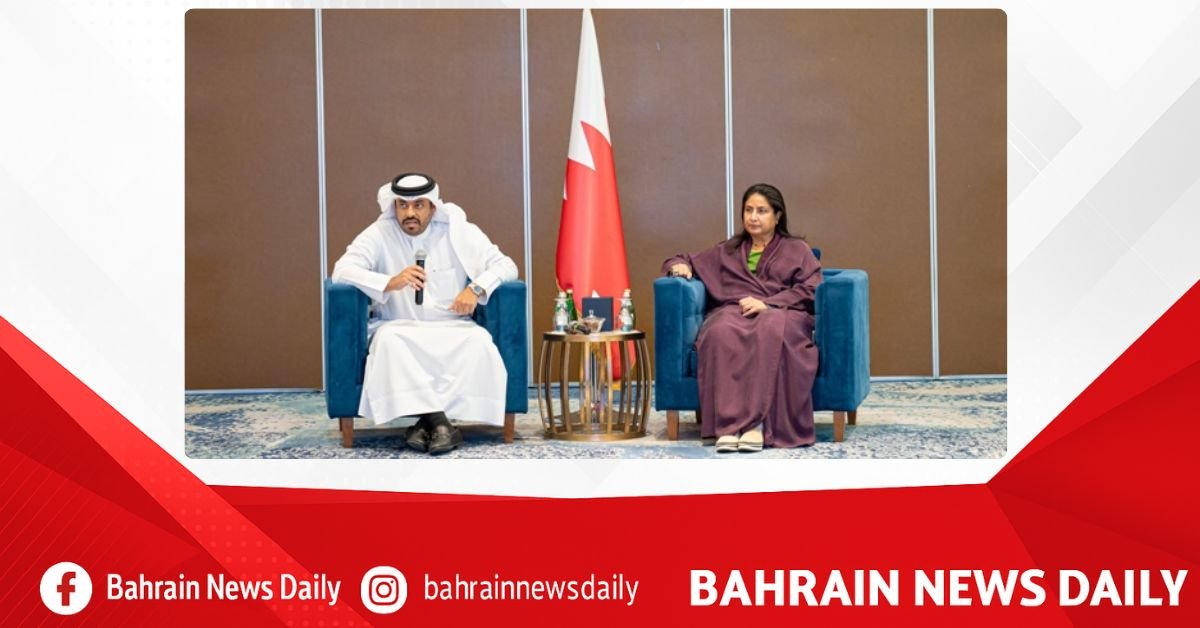
Manama, Oct. 19 (BNA): The 35th class of participants in the Institute of Public Administration’s (IPA) “Qeyadat” (Leaderships) program, which is a nationwide initiative to cultivate government leaders, were welcomed by Dr. Shaikha Rana bint Isa bin Daij Al Khalifa, Director General of the Institute of Public Administration (IPA).
IPA Director General receives participants of Qeyadat Programme
In order to effectively interact with various official media channels, Dr. Shaikha Rana bint Isa emphasized the significance of providing government leaders—directors and their counterparts in particular—with sophisticated communication skills. Enhancing the Kingdom of Bahrain’s leadership and visibility both domestically and globally requires these qualities.
The Director General clarified that the inclusion of a communication and influence module in the curriculum represents the Institute’s goal of giving participants up-to-date skills for media analysis and comprehending how it affects the reputation of their organization. She emphasized the Institute’s dedication to use a variety of teaching strategies, such as hands-on instruction and role-playing, to assist participants in gaining strong media skills, effectively representing their organizations, and showcasing Bahrain’s accomplishments both domestically and abroad.
The CEO of the National Communication Centre (NCC), Ahmed Khaled Al Araifi, emphasized that a key component of attaining excellence in Bahrain’s government communication system is sustained investment in the training of government executives. He pointed out that enhancing the government communication framework in accordance with a comprehensive national vision is facilitated by developing leadership ability across many sectors that can adjust to integrated communication strategies.
By highlighting Bahrain’s achievements, projects, and goals, this vision establishes government communication as a vital force behind sustainable development. In support of the NCC’s efforts, he also praised the Institute’s emphasis on incorporating government communication into its programs.
Al Araifi emphasized the Center’s function in encouraging collaboration and coordination across government agencies’ communication units. He emphasized how crucial it is to work as a “Team Bahrain” to create an innovative, professional, and transparent culture of successful communication.
In order to improve the overall effectiveness of the communication sector and advance Bahrain‘s positive image and the accomplishments of its citizens in all spheres, he reaffirmed the NCC’s ongoing efforts to improve communication skills and national cadres’ readiness.

