

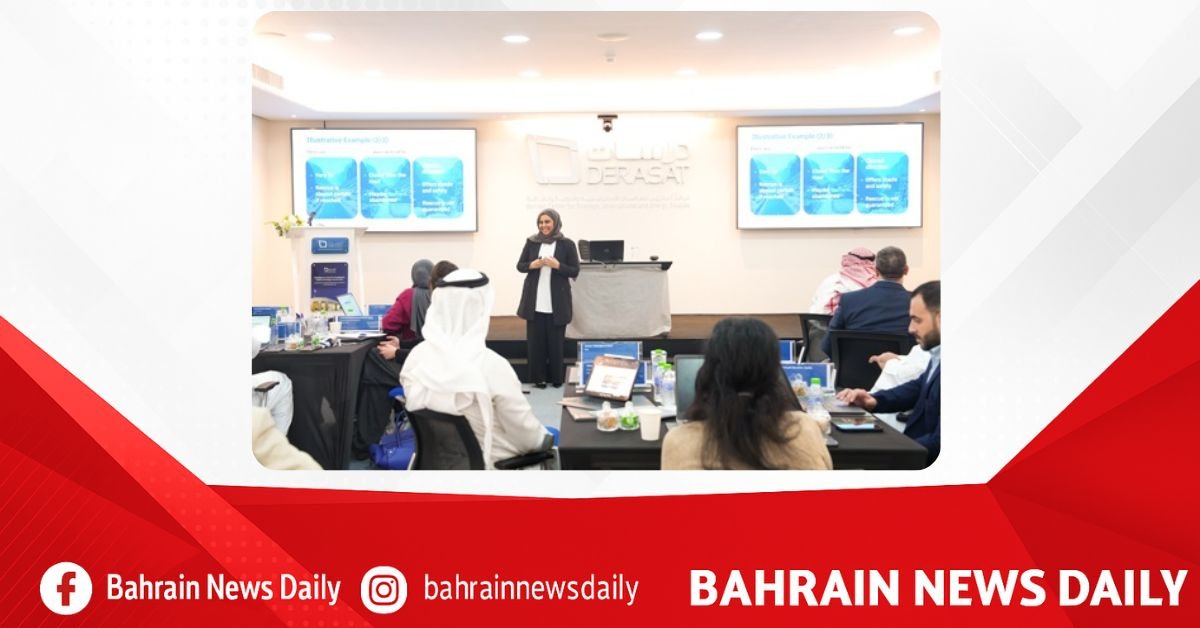
Nov. 16, Manama (BNA): The Bahrain Center for Strategic, International, and Energy Studies (Derasat) organized a specialized training course called “Artificial Intelligence Tools for Shaping the Future of Energy Investments” in an attempt to improve advanced research and training paths. A small group of national specialists and researchers from various national institutions and top businesses in the Kingdom of Bahrain attended the course.
Derasat organises AI tools training course to shape energy investments future
This course is a part of the Center’s executive training program, which aims to empower national talent to use A.I. tools in energy data analysis, foresee future changes in global markets, and enhance the capacity for knowledge-driven and evidence-based policymaking.
Dr. Omar Ahmad Al Ubaydli, Director of Studies and Research at Derasat; Dr. Abdullah Isa Al Abbasi, Director of the Energy and Environment Programme; and Engineer Sabika Khalid Ismail, a program researcher, gave presentations on a variety of models and real-world AI applications in supply chain analysis, energy efficiency management, and the creation of creative solutions to reach carbon neutrality. Discussions on worldwide trends in the incorporation of smart technologies into renewable energy projects were also included.
The CEO of Derasat, Abdulla Mohamed Alahmed, confirmed that this course is an advanced step in the Center’s efforts to develop specialized national competencies that integrate strategic analysis with the useful use of contemporary technologies. He stated that Derasat is striving to solidify its standing as a preeminent think tank that helps skilled professionals in a variety of professions advance their careers.
The course is a component of a wide range of training programs created by Derasat to improve the integration of training and research, strengthening the Center’s function as an intellectual and knowledge-based platform assisting the country’s shift to a knowledge-based economy.

